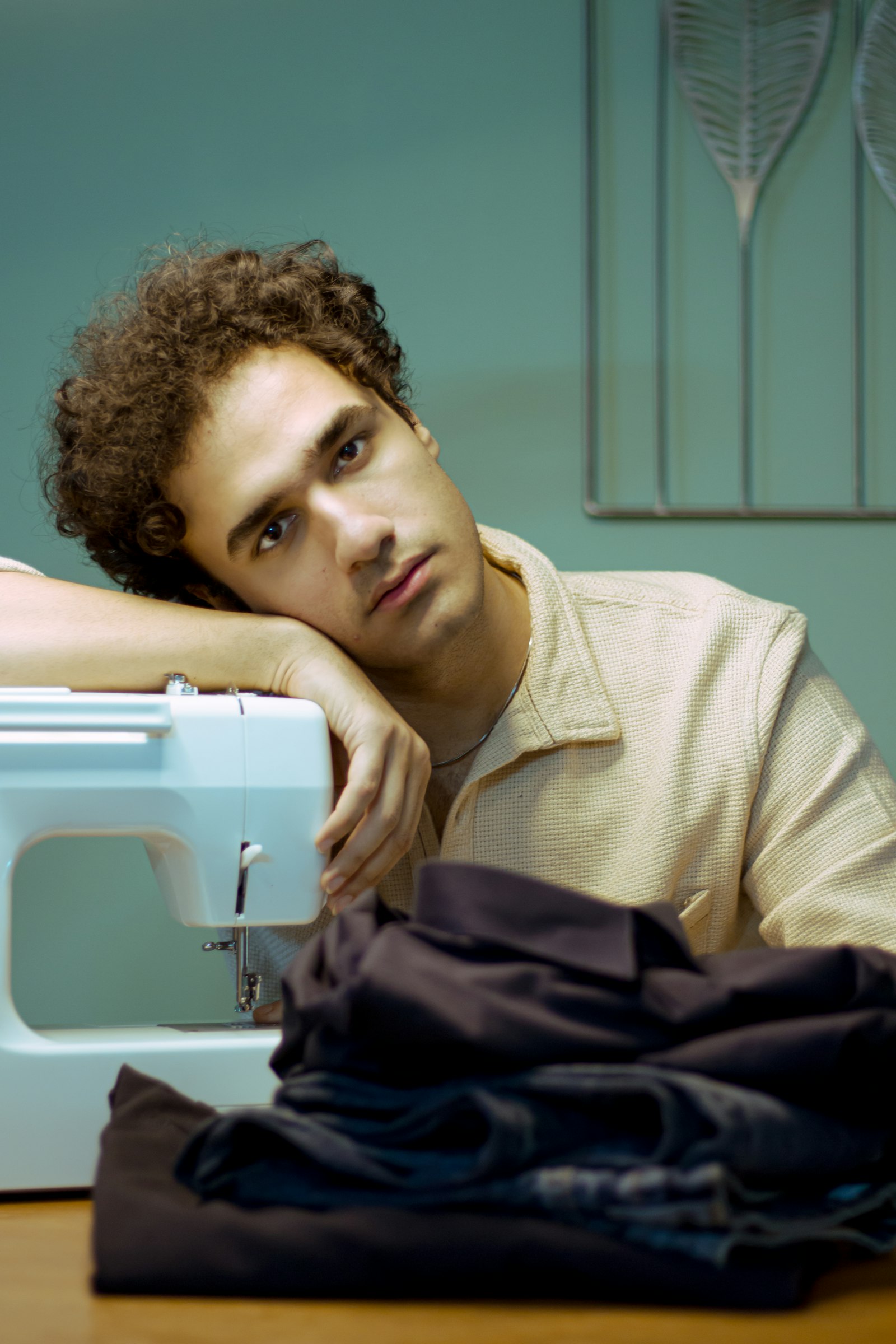
Here is a trade secret nobody puts on their comp card: sample trousers are hemmed for a man who does not exist. He is exactly six foot two, his inseam was decided in a meeting, and the rest of us borrow his clothes. Most models solve this with clips, gaffer tape, or standing very still. I solve it with a needle, a spool of grey thread - grey disappears into almost anything - and twenty minutes alone in a hotel room the night before a shoot.
I want to be clear about the ethics here. I do not alter the garment. A blind hem, done properly, is invisible from the outside and comes out with one pulled thread. The trousers arrive as samples and leave as samples. In between, for one day, they simply happen to fit the man actually wearing them. I have done this before campaigns, before shows, once in the back of a car with the driver watching me in the mirror like I was defusing something.
For six years, nobody noticed. That was the whole point, and honestly the part I was proudest of - my grandfather used to say the best tailoring is the kind you can't find with your fingers. Then last spring, in Florence, a stylist named Chiara knelt to clip the break she remembered being wrong, and found it already perfect. She looked at the hem. She looked at me. It was the longest silence of my professional life.
What she said, finally, was: "Who did this?" And because I was raised honest, I said: me. She turned the cuff, inspected the stitch spacing the way you'd read a signature, and handed it back. "You pick it out after, and you do mine next season." That was the entire negotiation. We have worked together four times since, and there is always, mysteriously, a pressing kit and good light in my fitting room.
So: don't tell wardrobe. Or do - it turns out the people who love clothes forgive almost anything done in the service of a better line. Just use grey thread, keep your stitches even, and always, always pick it out after.