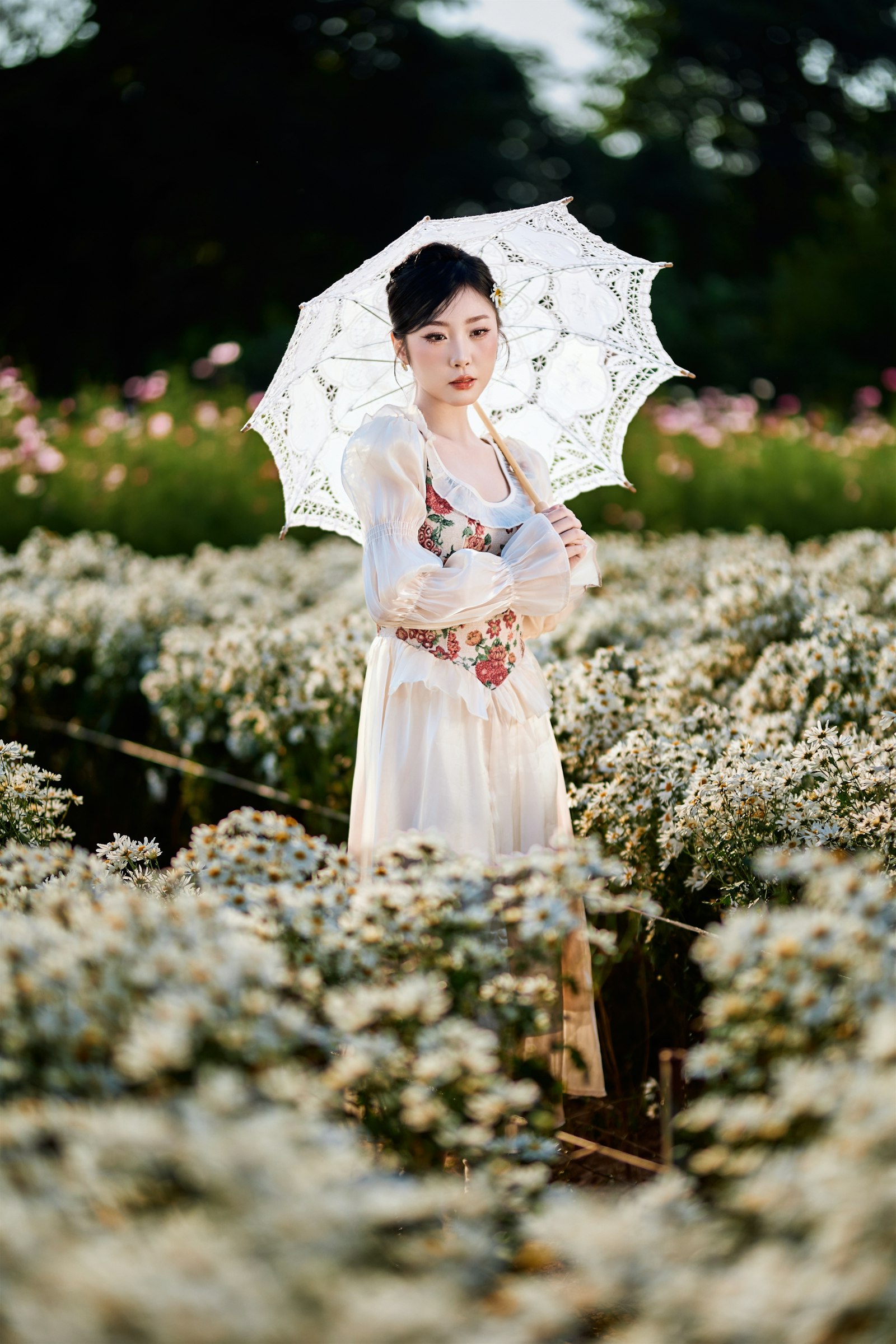
The dress in my best-known photographs is older than everyone who has ever photographed it. Cream silk, embroidered bodice, sleeves like held breath - and when it came to me, it was a wreck. Split seams, tea-coloured stains, a hem that someone in the 1970s had "fixed" with iron-on tape, which is the textile equivalent of a crime scene.
Restoring it took a winter. I am not a trained conservator; I am a model with my grandmother's needle box and an unreasonable amount of patience, which she assures me is the entire trade. You work in tiny stitches, you match thread to fabric that no mill has produced in decades, and you accept that some marks are staying because removing them would take the dress's memory with them.
What surprised me is how directly the mending feeds the modelling. When you have personally rebuilt a sleeve, you know exactly how far it can rise before the shoulder seam complains. You move differently in a garment whose weakest points you've held under a lamp. Photographers think I have an instinct for vintage clothes. It isn't instinct. It's maintenance knowledge, worn on the body.
And the pace of it recalibrates me. Modelling is a fast trade wearing a slow face - hurry up, hold still, next look. An evening of hand-sewing is the opposite: nothing to perform, nobody watching, one stitch and then another. My grandmother says romance is just attention that stayed. So is mending. I suspect they're the same discipline, and I intend to keep practising both.