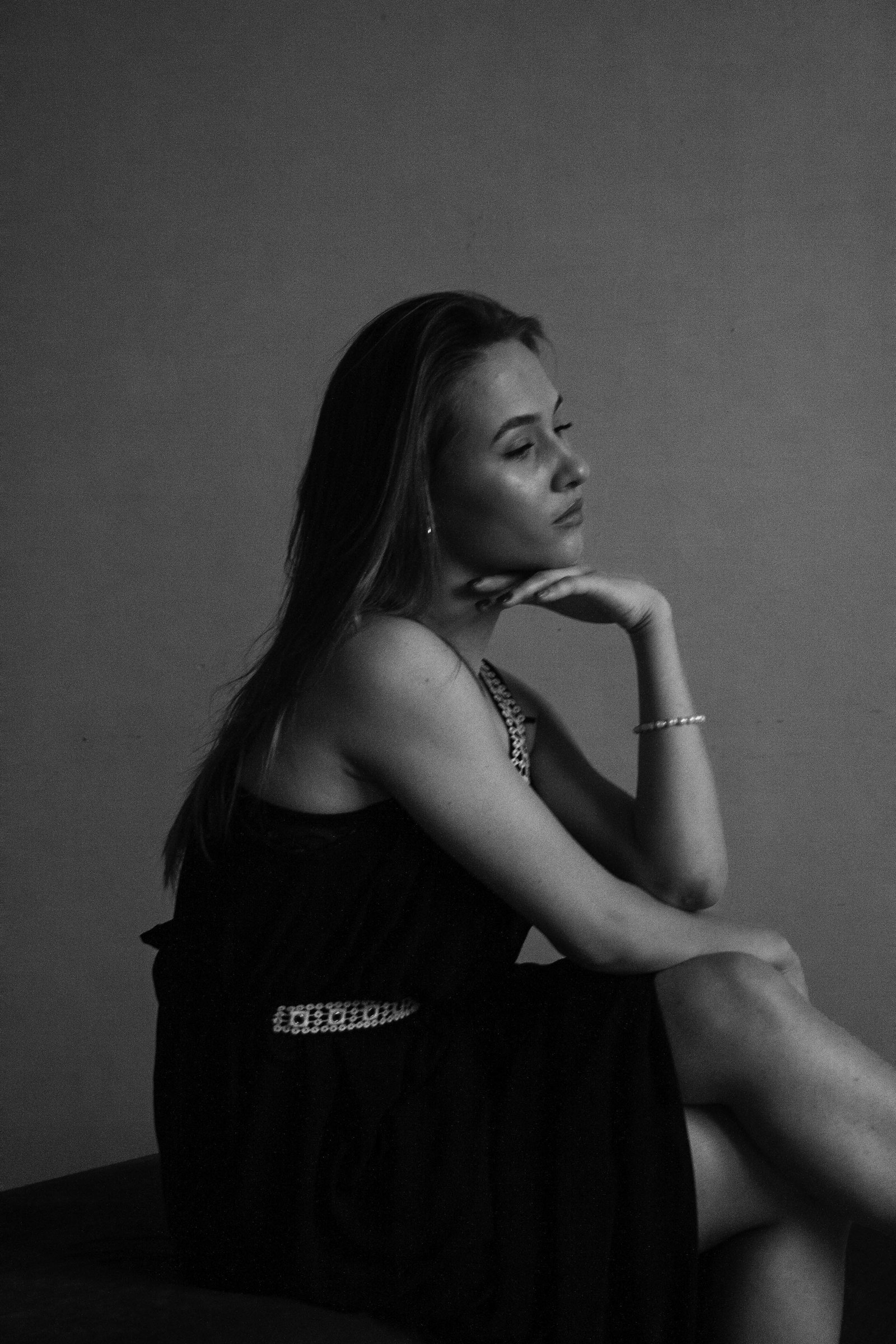
Early in my career, a photographer I admired lowered his camera mid-roll and said, "You're performing. I can't shoot a performance." I have thought about that sentence for ten years.
Models are taught to move. Change the pose every frame, keep the energy up, give options. It's useful training and it produces exactly the kind of pictures you scroll past. What that photographer wanted - what the best ones always want - is the opposite: a subject so settled that the smallest shift reads like an event.
So I learned stillness the way you learn anything: badly, then deliberately. I went back to ballet, not for the positions but for the discipline of holding one. I sat for a friend's large-format portraits, where a single sheet of film costs more than lunch and the exposure lasts whole seconds - you learn very quickly which parts of your body you've never actually relaxed. I practised doing nothing in front of a mirror, which sounds absurd and is, and works.
Stillness, it turns out, isn't the absence of movement. It's movement resolved - everything in the body finished arriving. The camera can tell the difference between empty and calm. So can people, which is why a truly still portrait feels almost intrusive to look at. Nothing is asking for your attention, and so it has all of it.
These days, when a day is going wrong on set, I don't add energy. I subtract it. Stop, settle, let the frame go quiet. The photograph is usually waiting right there.