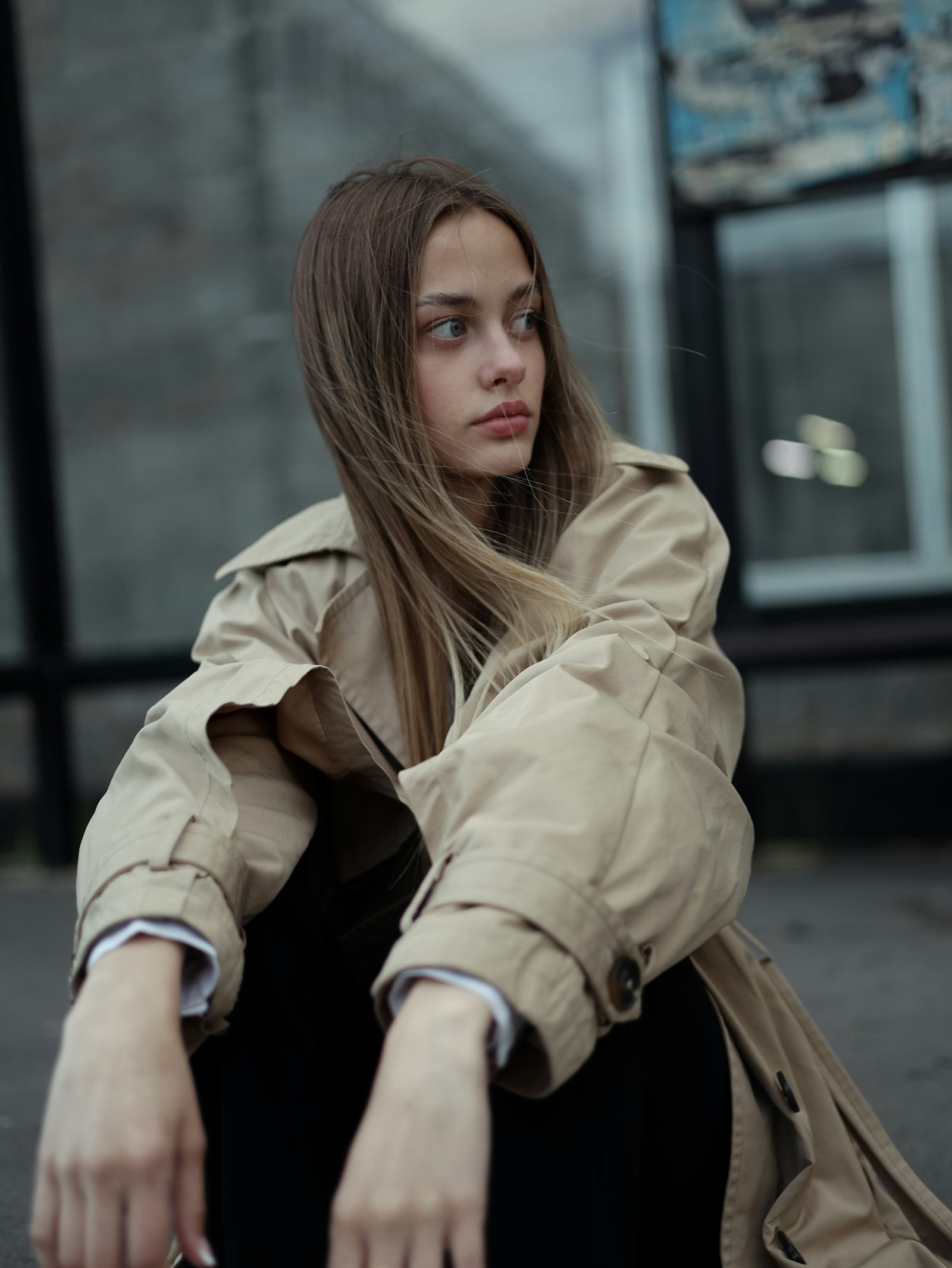
The brief said 'quiet drama, overcast, trench.' The Baltic said 'gusting from the northwest, all day.' When those two briefs disagree, the sea wins, and the trick of embankment work is arranging to have wanted what you were going to get anyway.
Wind is the cheapest special effect in fashion and the hardest to fake. A fan in a studio blows one direction at one speed and everyone can tell. The real thing restyles you between every frame — hair across the face, collar suddenly up, coat hem answering a question nobody asked. The published spread looks art-directed within an inch of its life. It was the weather, accepting no notes.
What they don't teach you: you don't fight for the clean frame, you learn to count gusts. The water telegraphs each one — you watch the ripple pattern come toward you, drop your shoulders, and hold whatever the air decides to do with you. My photographer calls it 'sailing.' He stands with his back to the wind and I stand facing it, and between us we own about forty degrees of usable angles all afternoon.
The white shirt frames came last, when the light dropped and everyone sensible had gone inside. A white shirt in moving air photographs like liquid; it was also, by then, functioning as the only thing between me and the sea air, the trench having been promoted to 'hero garment' and therefore banned from my shoulders between takes. There is a special radiance models get in the final hour of a cold shoot. It is one part golden light and three parts the knowledge that the van has heating.
We wrapped when my hair stopped coming back down between gusts. The last frame of the day — collar up, eyes away, hair mid-air — is the one the magazine ran full-page. The wind, as usual, took no credit.