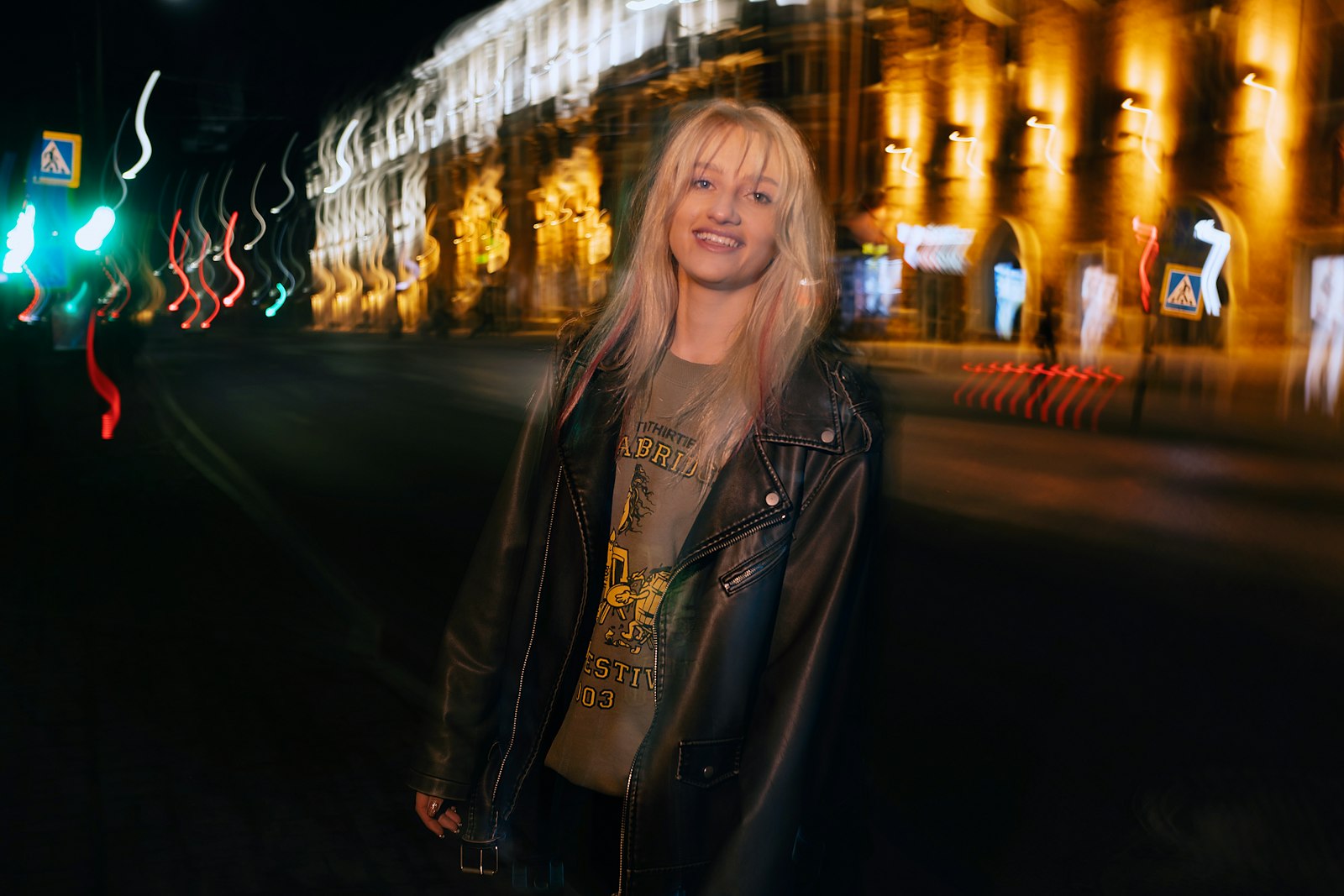
The brief was one sentence: "I want the lights to move and you to almost stay." Which sounds simple until you realise it means walking at exactly the speed of a two-second shutter, on cobblestones, in boots, while looking like none of it is happening.
Here is what nobody tells you about motion-blur work: your face has to be the still point. The coat can fly, the streetlights can smear into ribbons, but if your chin drifts even slightly, you're not a model in the frame anymore - you're a ghost. So you learn this strange split: everything below the neck committed to movement, everything above it committed to stillness. It's the closest my job gets to drumming.
Take after take, the photographer would look at the back of the camera and say "faster" or "slower" like he was tuning an instrument. The keepers came after midnight, when my legs had stopped negotiating and just walked. In the best one I'm laughing - not for the camera, but because a night bus had just gone past and the driver honked the horn in rhythm with my steps. The city collaborates, if you stay out late enough.
I got home at four, with bruised feet and forty seconds of perfect blur spread across three hundred frames. Daylight models get golden hour. We get this: the hour when the lights melt, and you learn to be the one solid thing in a moving world.